Looking for a Washington neighborhood that feels tucked away without feeling far away? Wesley Heights stands out for exactly that balance. If you are drawn to tree-lined streets, substantial homes, and a quieter residential setting in Northwest DC, this neighborhood offers a distinctive mix of history, architecture, and daily convenience. Let’s take a closer look.
Where Wesley Heights Sits
Wesley Heights is a close-in Northwest Washington neighborhood just southwest of American University. Historic planning documents place its edges at Nebraska Avenue NW, New Mexico Avenue NW, Garfield Street NW, and Battery Kemble Park.
That location helps explain the neighborhood’s appeal. You are near the core of Washington, yet the setting reads as more private and residential than many other parts of Northwest DC.
What the Neighborhood Feels Like
Official planning language describes Wesley Heights as a residential area of single-family detached dwellings with large private yards on landscaped streets. In practical terms, that means a neighborhood defined by space, greenery, and a more measured pace.
Compared with denser mixed-use areas, Wesley Heights tends to feel calmer and more contained. The combination of large-lot housing, a park edge, limited local retail, and active neighborhood civic life gives it a distinctly leafy character.
A Neighborhood Shaped by Planning
Wesley Heights did not emerge by accident. Its modern development phase began in 1923, when the W.C. and A.N. Miller Company acquired the already-platted neighborhood and developed it for automobile owners rather than streetcar riders.
That planning approach still shows today. DC preservation sources describe Wesley Heights as an early example of coordinated community design, with curving streets, homes fitted to the terrain, and original amenities that included a community center, neighborhood events, a homeowner's association, and a neighborhood publication called The Leaves.
This history also includes an important fact that should be stated plainly. Historical records show exclusionary deed restrictions that barred African Americans, Jews, and other groups. That discriminatory history is part of the neighborhood’s documented origin story.
Architecture You Can See and Feel
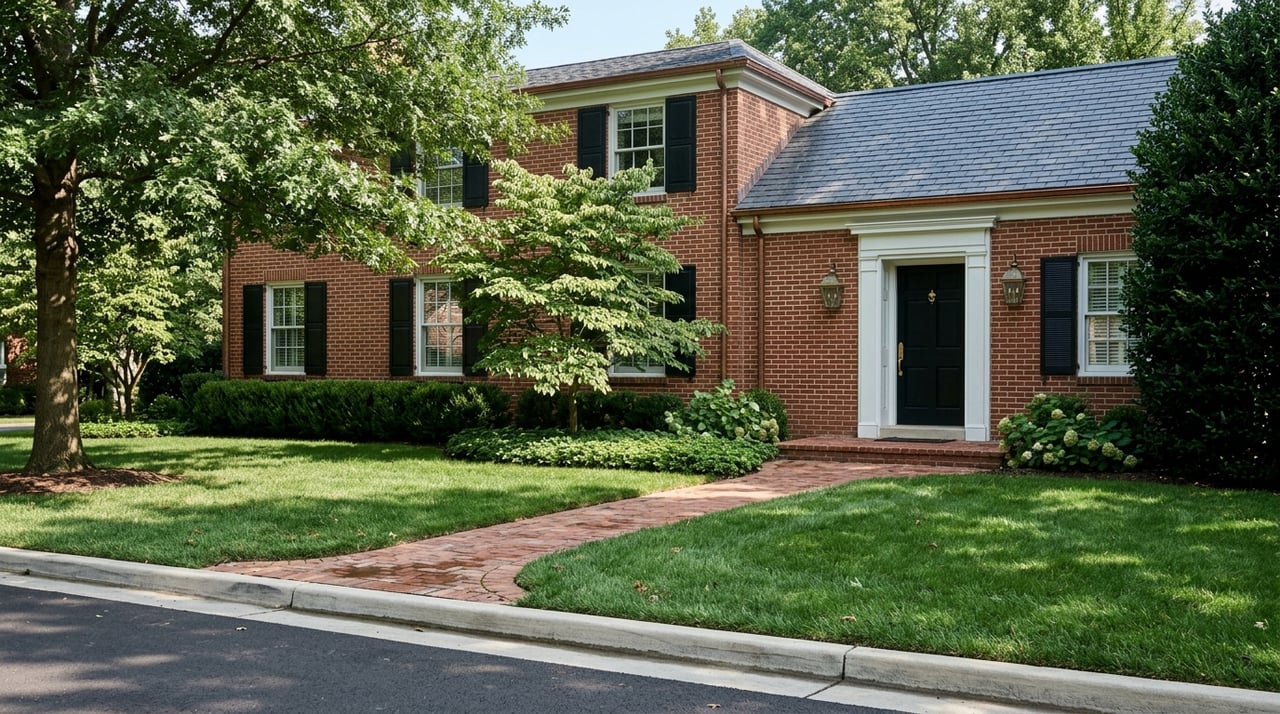
If you appreciate traditional architecture, Wesley Heights offers a strong sense of visual continuity. The housing stock is closely associated with early-20th-century revival styles, especially Colonial Revival and Tudor Revival, along with Dutch Colonial and Spanish Colonial examples.
Many homes are two-story, brick- or stone-faced residences with gabled roofs. The result is a streetscape that feels established and cohesive, while still offering variation from one property to the next.
Wesley Heights also has more architectural depth than some buyers expect. Historic inventory records preserve some houses from the 1890s, which gives the neighborhood a layered timeline rather than a single-era appearance.
The MacNeil Influence
Much of Wesley Heights was shaped by Gordon Earl MacNeil, lead architect for the Miller Company. He designed many of the homes as well as the 1927 Wesley Heights Community Club.
That clubhouse once served as the neighborhood’s social and commercial center. It originally included clubrooms, a grocery, a pharmacy with a small post office, and the Miller Company real estate office. Even now, that history helps explain why Wesley Heights feels intentionally planned rather than pieced together.
Parks and Open Space Nearby
For many buyers, one of the neighborhood’s biggest strengths is its relationship to nearby green space. Glover-Archbold Park, a 183-acre National Park Service unit in northwest Washington, includes a nearly 2.5-mile trail running from Van Ness Street NW to the Foundry Branch Park trail.
Battery Kemble Park also adds to the area’s outdoor appeal. Battery Kemble is a Civil War fort site, and the fort’s parapet and gun positions remain visible within the park.
These park connections reinforce the neighborhood’s leafy identity. They also add a sense of separation from the city’s faster rhythms, even though Wesley Heights remains close-in by Washington standards.
Daily Convenience Without the Rush
Wesley Heights is primarily residential, but it is not isolated. Preservation documents note that nearby retail was planned at the Spring Valley Shopping Center and the Massachusetts Avenue parking shops to provide neighborhood retail services to Spring Valley and Wesley Heights.
That detail matters because it reflects the neighborhood’s original automobile-oriented planning. Instead of a dense commercial corridor running through the center of the neighborhood, convenience was placed nearby, helping preserve the residential feel of the streets themselves.
For many buyers, that tradeoff is part of the appeal. You get access to everyday services nearby while keeping a quieter home environment.
Civic Life Still Matters Here
Neighborhood character is not only about houses and streets. It is also about whether residents stay engaged over time.
In Wesley Heights, that civic thread remains visible. The Spring Valley-Wesley Heights Citizens Association is active and continues to share community newsletters and gatherings, which suggests an ongoing neighborhood life that still matters to residents.
Why Buyers Look Closely at Wesley Heights
If you are considering Northwest DC, Wesley Heights often appeals for a few clear reasons:
- Space and privacy through detached homes and larger yards
- Established architecture with strong early-20th-century character
- Green surroundings shaped by landscaped streets and nearby parkland
- Close-in location with access to the broader city
- Quiet residential feel supported by limited local retail within the neighborhood itself
For buyers who value architecture, setting, and a sense of retreat, Wesley Heights can offer a compelling alternative to denser Washington neighborhoods.
What Sellers Should Understand
If you own a home in Wesley Heights, the neighborhood story is part of the property story. Buyers are often responding not just to square footage or finishes, but also to the broader setting: the curving streets, mature landscaping, preserved architectural character, and close relationship to parkland.
That means presentation and positioning matter. In a neighborhood like Wesley Heights, a home is best understood in context, with attention to design, site placement, and the qualities that make the street and surrounding area feel distinct.
Wesley Heights at a Glance
| Feature | What It Means for You |
|---|---|
| Close-in Northwest DC location | Easier access to the city while keeping a residential setting |
| Detached homes with large yards | More privacy, greenery, and breathing room |
| Revival-style architecture | Strong visual character and established streetscapes |
| Glover-Archbold and Battery Kemble nearby | Access to trails, open space, and historic landscape |
| Planned retail nearby, not central | Convenience without changing the neighborhood’s quieter feel |
Final Thoughts
Wesley Heights offers something increasingly rare in Washington: a neighborhood that feels calm, green, and architecturally grounded while remaining close to the city. Its large-lot homes, landscaped streets, preserved design character, and nearby parkland create a setting that feels both established and enduring.
If you are thinking about buying or selling in Wesley Heights, neighborhood knowledge matters. For tailored guidance on this part of Northwest Washington, connect with Russell Firestone.
FAQs
Where is Wesley Heights located in Washington, DC?
- Wesley Heights is in close-in Northwest Washington, southwest of American University, with historic planning documents placing its edges at Nebraska Avenue NW, New Mexico Avenue NW, Garfield Street NW, and Battery Kemble Park.
What types of homes are common in Wesley Heights?
- Wesley Heights is known for single-family detached homes, often in Colonial Revival, Tudor Revival, Dutch Colonial, and Spanish Colonial styles, with many brick- or stone-faced exteriors and gabled roofs.
What makes Wesley Heights feel different from other Northwest DC neighborhoods?
- The neighborhood’s large private yards, landscaped streets, nearby parkland, limited local retail, and primarily residential layout give it a quieter and more self-contained feel.
Are there parks near Wesley Heights?
- Yes. Nearby green spaces include Glover-Archbold Park, which has a nearly 2.5-mile trail, and Battery Kemble Park, a Civil War fort site with visible historic features.
Does Wesley Heights have an active community association?
- Yes. The Spring Valley-Wesley Heights Citizens Association remains active and shares neighborhood newsletters and community gatherings.
What is important to know about Wesley Heights history?
- Wesley Heights was shaped by coordinated early-20th-century planning, but its documented history also includes exclusionary deed restrictions that barred African Americans, Jews, and other groups.