By Russell Firestone
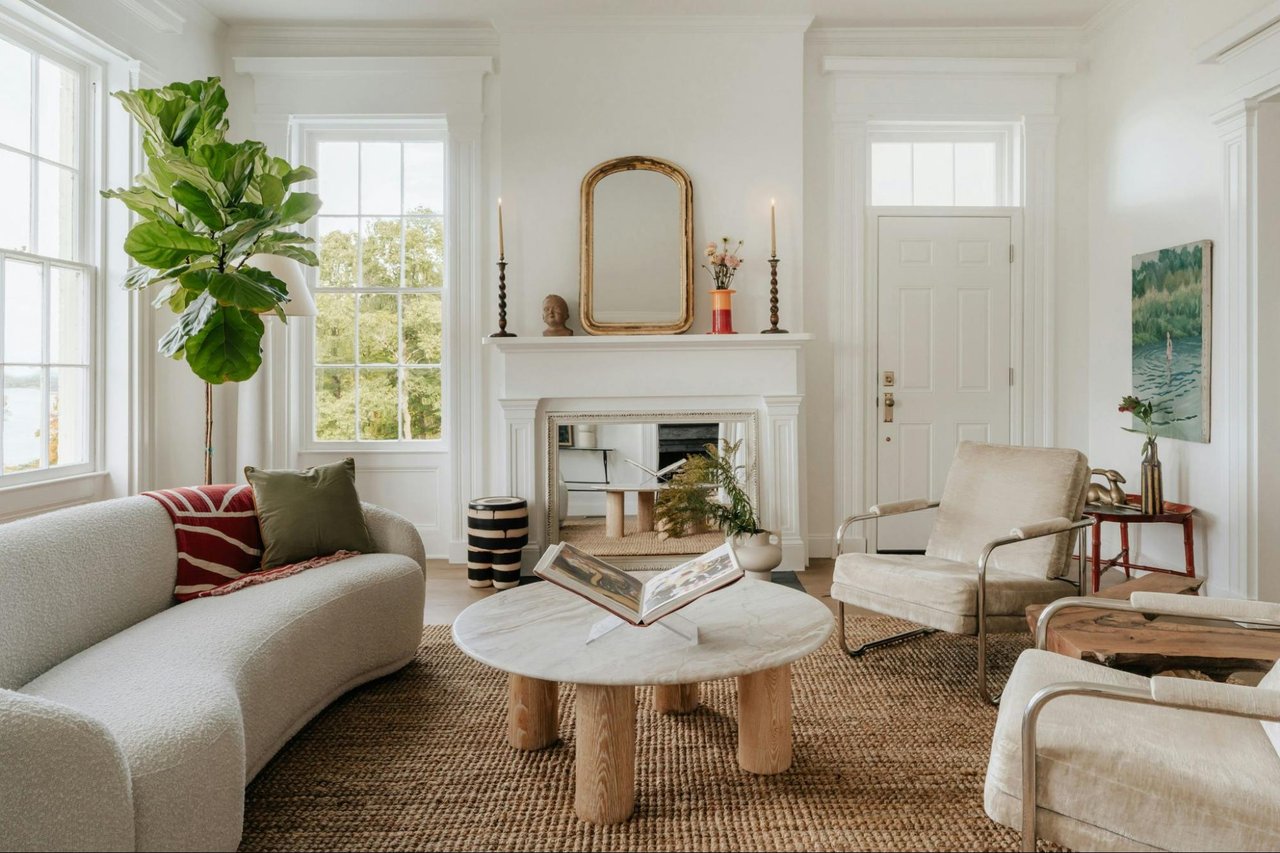
Choosing furniture for a Georgetown home is more consequential than most people realize. The Federal rowhouses, Victorian Italianates, and converted carriage houses that define this neighborhood have specific proportions, ceiling heights, and architectural details that furniture must work with, not against. A piece that looks perfect in a showroom can overwhelm a Georgetown parlor or disappear in a double-height drawing room.
Key Takeaways
- Scale is the first and most important consideration — Georgetown's historic rooms have specific proportions that oversized contemporary furniture consistently violates, making rooms feel smaller and more crowded than they are
- The architectural character of the home should guide furniture style: Federal and early Victorian rooms support period-appropriate or transitional pieces; converted carriage houses and modern renovations have more flexibility
- The deep rowhouse footprint that characterizes most Georgetown homes creates distinct lighting zones that furniture placement must account for
- Outdoor furniture for Georgetown terraces and garden courts deserves the same quality standard as interior pieces, since these spaces are genuine living areas and frequently visible from interior rooms
Scale First
One of the most common furniture mistakes in Georgetown homes is scale. Homeowners arrive with furniture that once worked in a different context and find that the same pieces make Georgetown's historically proportioned rooms feel compressed.
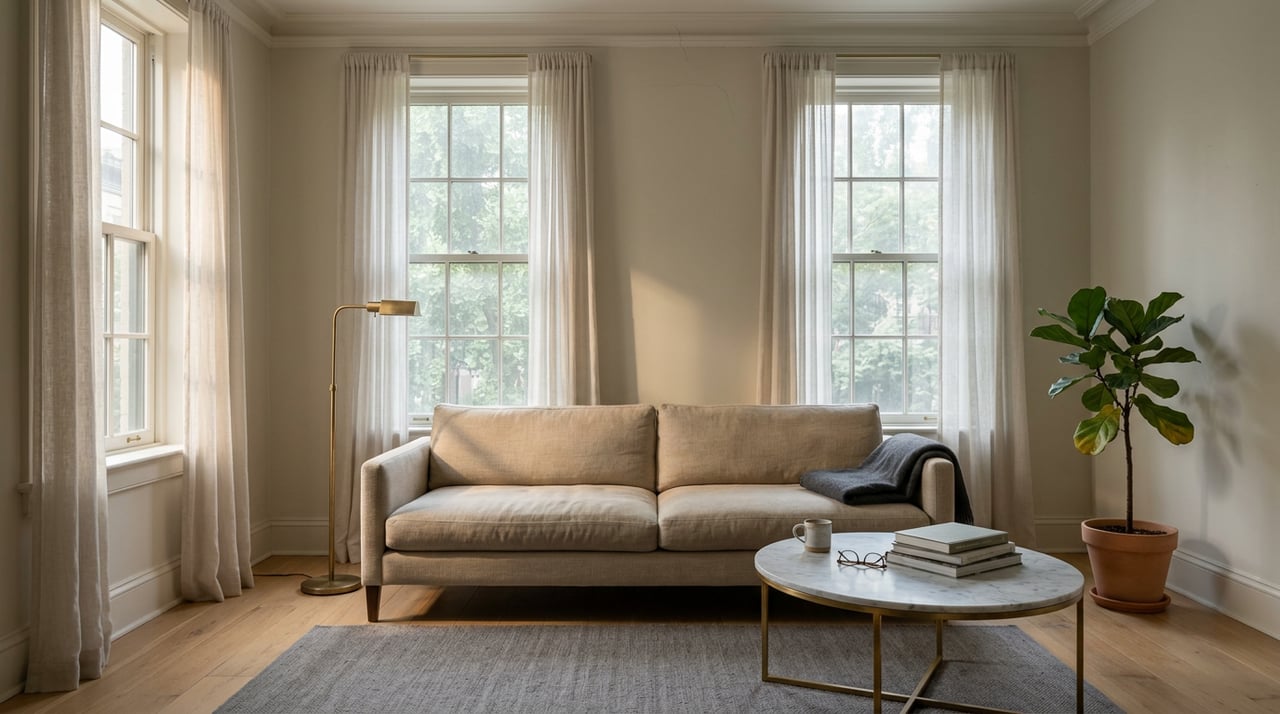
Ceiling heights in Georgetown's primary rooms run nine to twelve feet, but the room footprints are narrower than modern construction. A sofa that fills a room comfortably in a Dupont Circle condo may push a Georgetown parlor wall to wall. Measure carefully before purchasing, leave at least eighteen inches of clearance behind sofas, and resist the urge to fill every corner.
Furniture Scale Rules for Georgetown's Historic Rooms
- Sofas no longer than eight feet in standard Georgetown parlors
- Dining tables sized for the room's actual footprint rather than holiday capacity
- Beds scaled to the bedroom ceiling height
- Accent chairs and side tables that do not compete with the primary seating for visual weight
Match the Furniture to the Architecture
Georgetown's architectural range means no single furniture style works everywhere. The right approach starts with reading what the architecture is asking for.
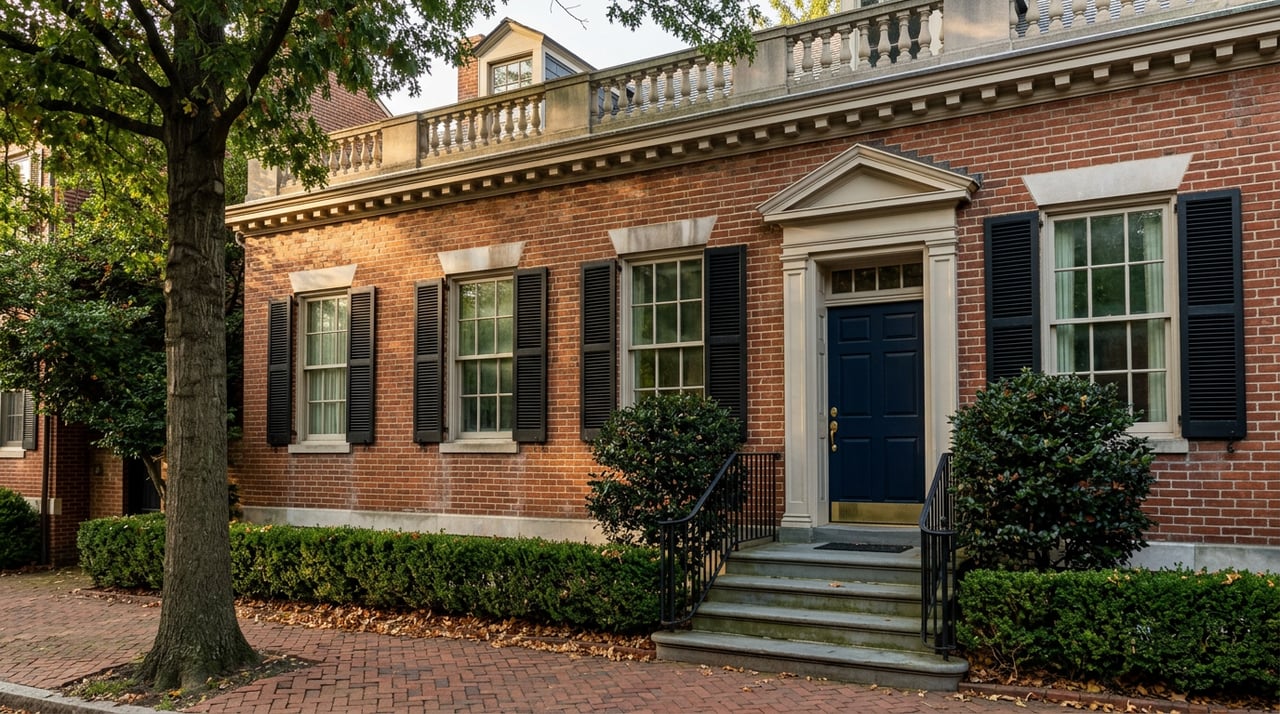
Federal and early Victorian rooms support furniture that references their period: dark woods, turned legs, upholstered pieces in wool, linen, and leather. A Georgian secretary desk, a Chesterfield sofa, or a Pembroke table belong to the same design tradition as the room. Converted carriage houses and modern renovations have more latitude; warm minimalism and mid-century styles both work when the architecture is not pulling in a historic direction.
Furniture Styles That Work in Georgetown's Main Home Types
- Federal rowhouses (pre-1840): dark wood finishes, turned and tapered legs, upholstered pieces in neutral wool or linen, and period-adjacent art reinforce the home's original identity
- Victorian Italianates (1840–1890): more ornate millwork supports richer furniture, including velvet upholstery, carved wooden frames, and heavier case goods that match the architecture's decorative density
- Converted carriage houses: exposed brick, timber framing, and stone floors support mid-century and warm minimalist pieces particularly well
- Modern renovations within historic shells: transitional pieces in natural materials with clean lines and warm finishes bridge the historic exterior and the renovated interior
Account for Georgetown's Lighting Zones
Georgetown's deep rowhouse footprints create distinct lighting zones that furniture placement must account for. Front-facing parlor rooms along N Street, O Street, and the cross streets between Wisconsin and 34th receive strong natural light. Rear rooms on the same floor receive softer, more diffuse light, particularly in north-facing exposures.
English basements and garden-level rooms can feel dim without deliberate strategy. Furniture in lighter finishes keeps these spaces from feeling heavy. Mirrors positioned to reflect available light from garden-level windows are one of the most effective tools for making lower-level Georgetown rooms feel larger.
English basements and garden-level rooms can feel dim without deliberate strategy. Furniture in lighter finishes keeps these spaces from feeling heavy. Mirrors positioned to reflect available light from garden-level windows are one of the most effective tools for making lower-level Georgetown rooms feel larger.
Furniture and Finish Choices for Different Georgetown Light Conditions
- Front parlor rooms with strong natural light: richer finishes and darker woods work well
- Rear and garden-facing living rooms: lighter finishes, warm whites, natural oak, and linen upholstery maximize available light
- English basements and garden-level rooms: mirrors, light-finish furniture, and pale neutral upholstery are essential since dark furniture absorbs limited light and makes the space feel smaller
- Hallways, staircases, and landings: furniture that does not interrupt the light path between rooms keeps the home feeling connected top to bottom
Furnish the Outdoor Spaces as Seriously as the Interior
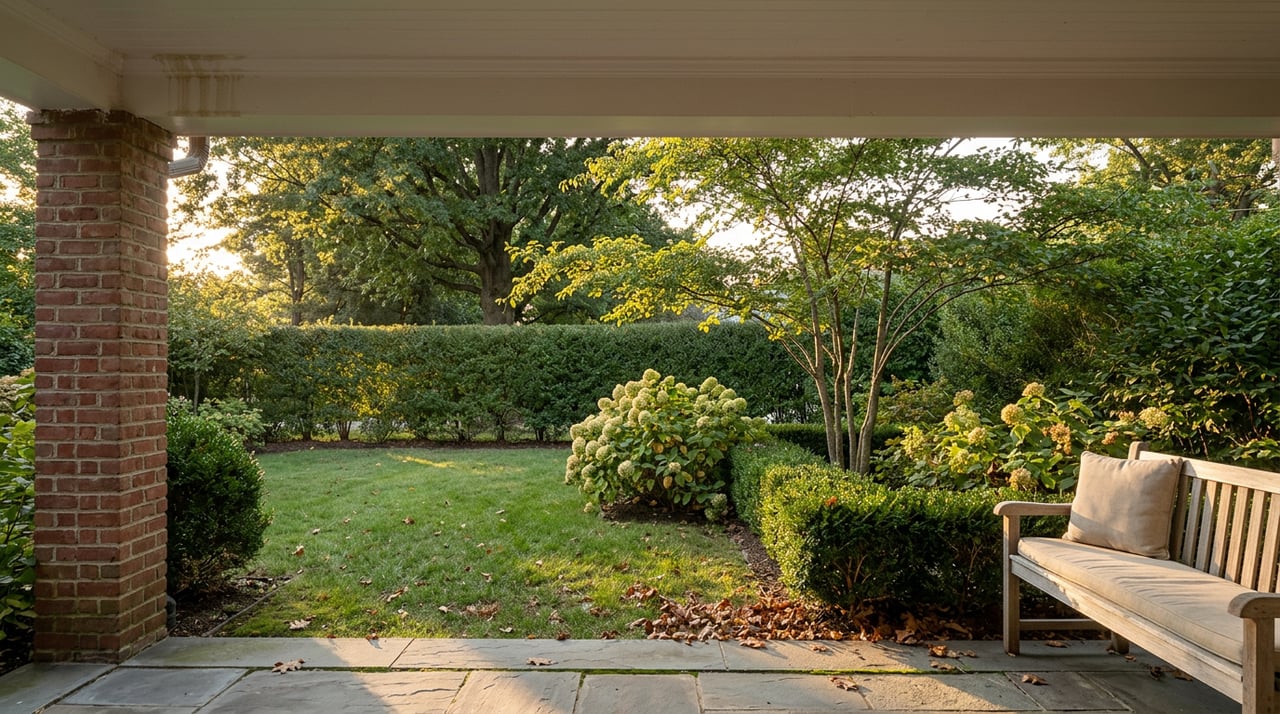
Georgetown's garden terraces, brick courtyard gardens, and rear patios are living spaces. Invest in outdoor furniture at the same quality level as interior pieces and approach the terrace or courtyard as a room with the same compositional discipline.
In Georgetown, where outdoor space is limited, the furniture on a terrace should match the home's architectural character. Wrought iron and painted teak work well in Federal and Victorian settings; clean-lined aluminum or teak works in modern renovations.
Outdoor Furniture Principles for Georgetown Gardens and Terraces
- Weather-resistant materials at interior quality levels rather than lightweight resin that reads as temporary
- Seating scaled to the footprint, such as a bistro set for a narrow brick patio or a full dining table and chairs for a larger courtyard that can support entertaining
- Outdoor cushions in weather-rated fabric in colors that complement the brick, stone, and planting palette
- Lighting that extends the terrace into the evening, with string lights, low-voltage landscape lighting, and lanterns
FAQs
Should I buy antiques for a Georgetown historic home or are reproductions acceptable?
Both work, but what matters is quality and proportion. A well-made reproduction in the right scale reads beautifully in a Georgetown Federal or Victorian room. A poorly scaled antique that does not fit the room reads worse than a well-chosen reproduction. Prioritize scale and condition over provenance.
How do I make a small Georgetown bedroom feel larger without removing furniture?
A low-profile bed, minimal case goods, mirrors on the wall opposite the window, and light-finish furniture throughout are the most effective tools. Eliminating the footboard gains several inches of visual depth. Mounting bedside lights on the wall rather than using table lamps frees up nightstand surface and reduces clutter.
Is it worth investing in custom furniture for a Georgetown home?
For rooms where standard proportions do not fit — a narrow front parlor, an awkwardly shaped rear room, a garden-level space with non-standard ceiling height — custom pieces are often the most efficient solution. A piece made for the room eliminates the compromises that come from adapting standard furniture to a space it was not designed for.
Contact Russell Firestone Today
Furnishing a Georgetown home well requires an understanding of the architecture, the light, and the proportions that make each property distinct. I have worked in this neighborhood for my entire career and have seen firsthand how the right furniture choices transform a Georgetown home, and how the wrong ones undermine it.