By Russell Firestone
Staging a home in Georgetown is a different exercise than staging almost anywhere else in Washington, DC. The buyers who tour properties on these streets arrive with a sophisticated eye and a clear sense of what this neighborhood is supposed to feel like. They are not imagining what a space could be, but evaluating what it already is.
Key Takeaways
- Decluttering is the single highest-return staging task in any Georgetown home, and in homes with historic architectural detail, it is essential to let the bones of the property do the work
- Georgetown buyers respond to a specific aesthetic: refined, curated, and connected to the neighborhood's Federal and Victorian architectural traditions
- Lighting and window treatment decisions have outsized impact in Georgetown homes, where deep lots and narrow rowhouse footprints can limit natural light on lower levels
- The outdoor spaces deserve the same staging attention as any interior room
Start With the Architecture, Not the Furniture
Georgetown's Federal rowhouses, Victorian Italianates, and converted carriage houses each have a design language built into their moldings, mantels, and floor plans. The most common staging mistake is when furniture and accessories compete with the architecture rather than letting it speak. A heavily contemporary interior in an 1840 Federal townhouse creates visual dissonance that buyers feel even when they cannot name it.
The first step is to strip the space back to its bones. Remove everything that does not belong to the home's original character or serve a clear compositional purpose.
What to Remove Before Photography and Showing
- Personal photographs, decorative collections, and objects that read as belonging to a specific owner rather than to the home itself
- Excess furniture, such as oversized sectionals, multiple accent chairs, and any piece that forces a buyer to navigate around it rather than move naturally through the room
- Window treatments that block natural light or obscure views of Georgetown's tree canopy and garden spaces
- Items stored on or around fireplaces that draw attention from what is typically the most architecturally significant feature in a Georgetown living room
Curate the Interior Toward Georgetown's Aesthetic
Once the space is cleared, the staging decisions that remain should lean toward the refined, curated character Georgetown buyers expect. This is a neighborhood where antique maps hang in dining rooms and bookshelves are edited rather than stuffed. Staging here is about making every visible object feel chosen.
Warm neutrals that pick up the tone of the brick, wood, and plaster that characterize Georgetown interiors photograph cleanly and resonate with buyers who know this aesthetic well.
Staging Choices That Resonate With Georgetown Buyers
- Antique or antique-adjacent furniture where the architecture supports it
- Simple floral arrangements scaled to the room
- Books edited and displayed spine-out with a few objects of visual interest, rather than a cluttered collection that reads as storage
- Art hung at proper picture rail height in frames that complement the woodwork
Address Light on Every Level
Georgetown rowhouses present a lighting challenge that staging must address directly. Deep lots and attached party walls mean middle floors receive natural light primarily from the front and rear. English basements and garden-level rooms can feel dim in ways that staging must compensate for.
Layer artificial lighting before photography and every showing. Table lamps and floor lamps create warmth and depth that overhead fixtures alone cannot achieve. Make sure every fixture is on during showings, as a room in layered warm light reads as larger and more inviting than the same room with flat overhead illumination.
Lighting Adjustments That Make a Difference in Georgetown Homes
- Warm-toned bulbs throughout, replacing cool or daylight bulbs that make walls and floors read as gray
- Table and floor lamps in rooms where overhead lighting is the only source, creating warmth at the human scale
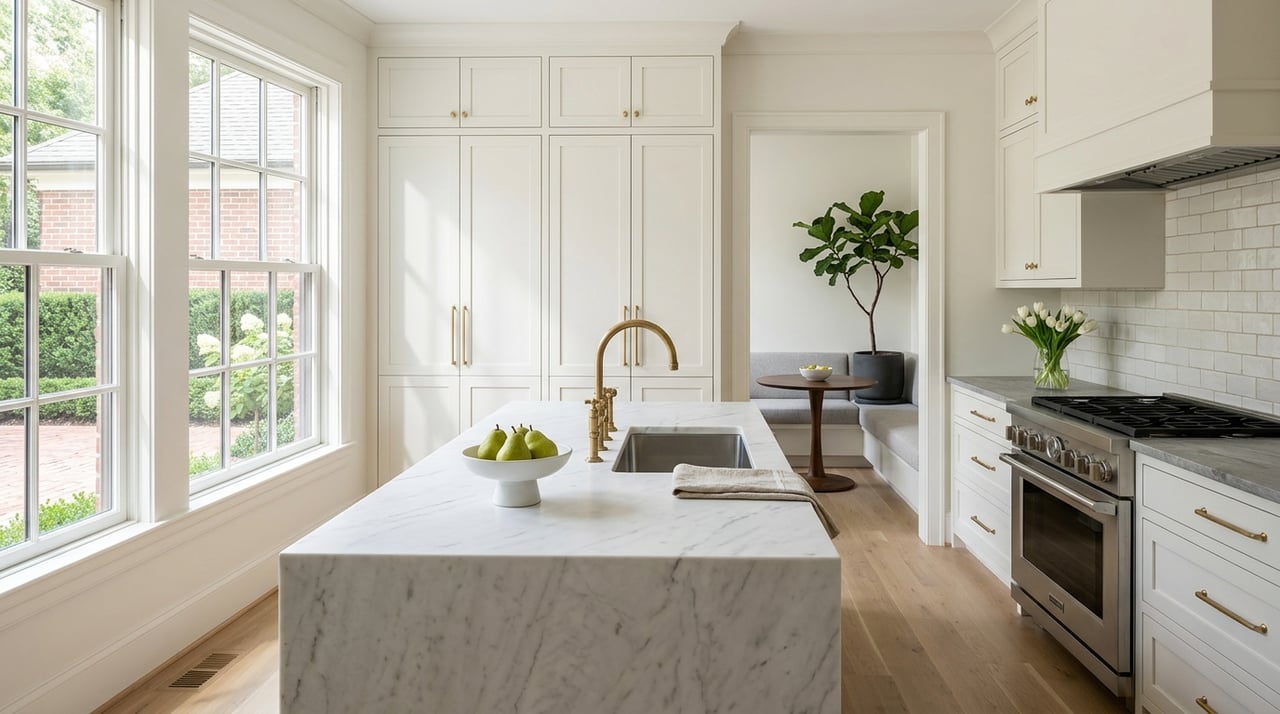
- Under-cabinet lighting in kitchens if not already installed, making countertops photograph cleanly
- Exterior lighting on for evening showings — Georgetown's gas lanterns and lit garden terraces are a genuine selling point that darkness eliminates
Stage the Outdoor Spaces
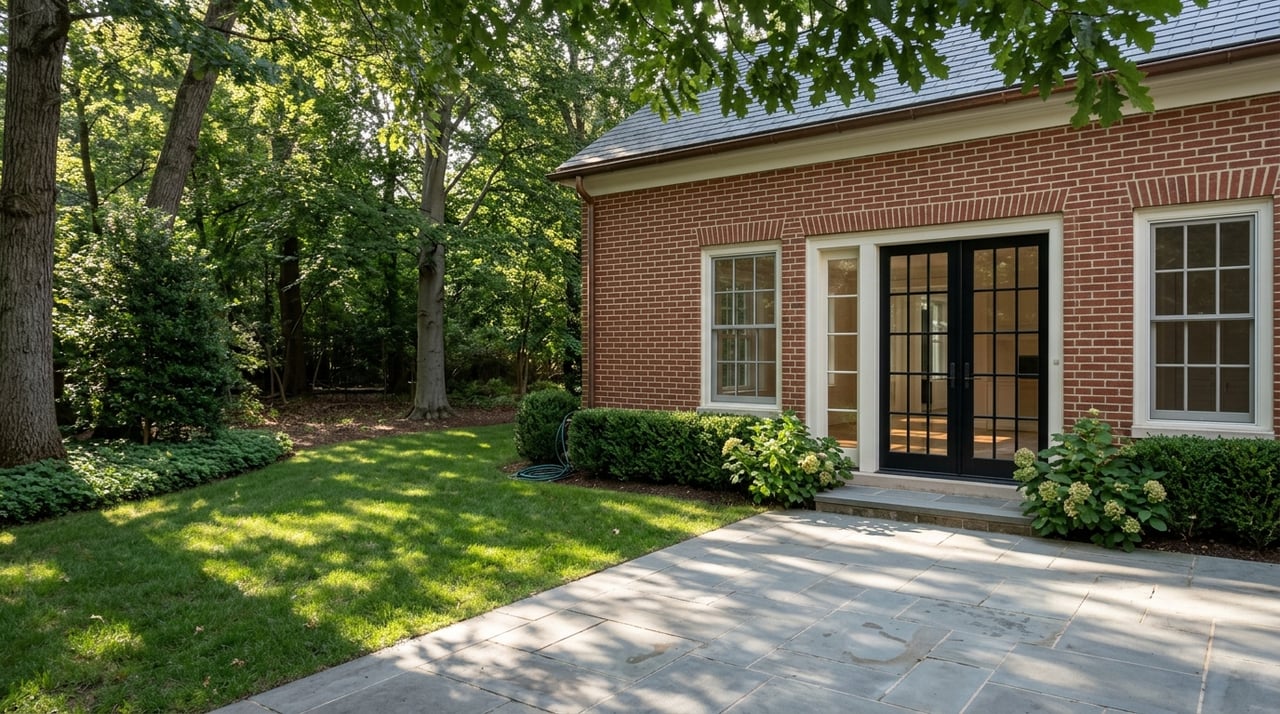
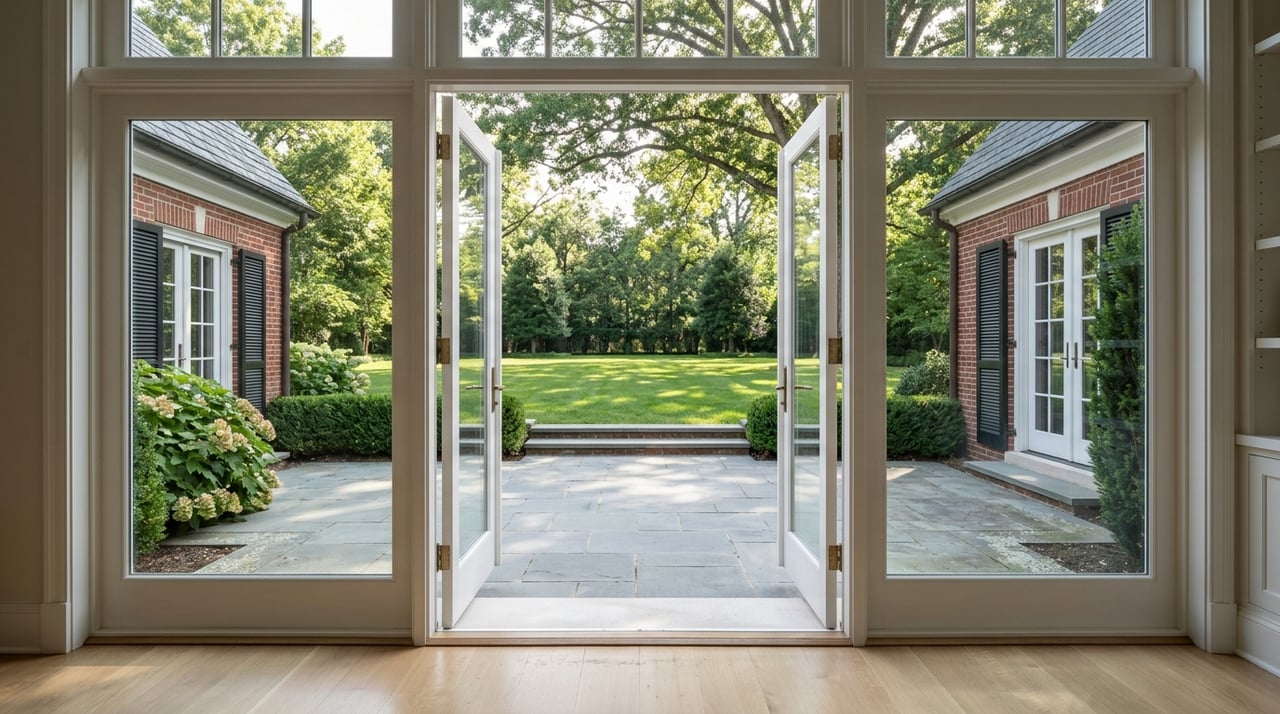
The garden terrace, brick courtyard, or rear patio of a Georgetown rowhouse is one of its most coveted features, and one of the most frequently under-staged. Buyers searching in Georgetown know how rare private outdoor space is here, and they arrive to showings ready to imagine themselves in it.
Pressure-wash brick and stone surfaces. Set a table and chairs on any terrace large enough to support them. Add potted plants in clean containers. Remove stored items that interrupt the image of the outdoor space as a living room extension.
Outdoor Staging Priorities for Georgetown Properties
- Pressure-washed brick and stone on patios, terraces, and garden pathways
- Furniture scaled to the space: a bistro set on a narrow terrace or a dining set on a larger courtyard
- Potted plants in clean containers at entry points and along garden edges
- Complete removal of storage items, recycling bins, and utility equipment from any space that will be photographed or shown
FAQs
How far in advance should I stage before listing in Georgetown?
It is recommended to complete staging at least one week before photography and two weeks before the first public showing. That window allows time to address gaps that emerge once the space is cleared, such as a wall needing touch-up, a fixture needing replacement, or a terrace needing a pressure wash. The first ten days of a listing are when the most motivated buyers are paying closest attention.
Do I need to hire a professional stager, or can I stage the home myself?
For most Georgetown properties, even a one-time staging consultation is worth the cost. A stager experienced in this market can identify issues that are easy to overlook when you live in the home. For vacant properties, full staging with rental furniture is almost always worth the investment at Georgetown's price points.
Should I renovate the kitchen or bath before listing, or stage as-is?
It depends on its current condition relative to comparable listings. Buyers at Georgetown's price points expect well-appointed kitchens and baths, and a dated kitchen in an otherwise strong home can anchor price.
Contact Russell Firestone Today
Georgetown is a market where presentation details matter, and where the difference between a home that generates multiple offers and one that sits can come down to how well it was prepared before the first buyer walked through. I have spent my career in this neighborhood and know exactly what buyers here respond to.
If you are preparing to sell a Georgetown home, I would welcome the chance to walk through it with you and give you specific, honest guidance about what to address before listing. Reach out to me, Russell Firestone, to start the conversation.